
Orphan Charity Foundation
About Us
About the Foundation
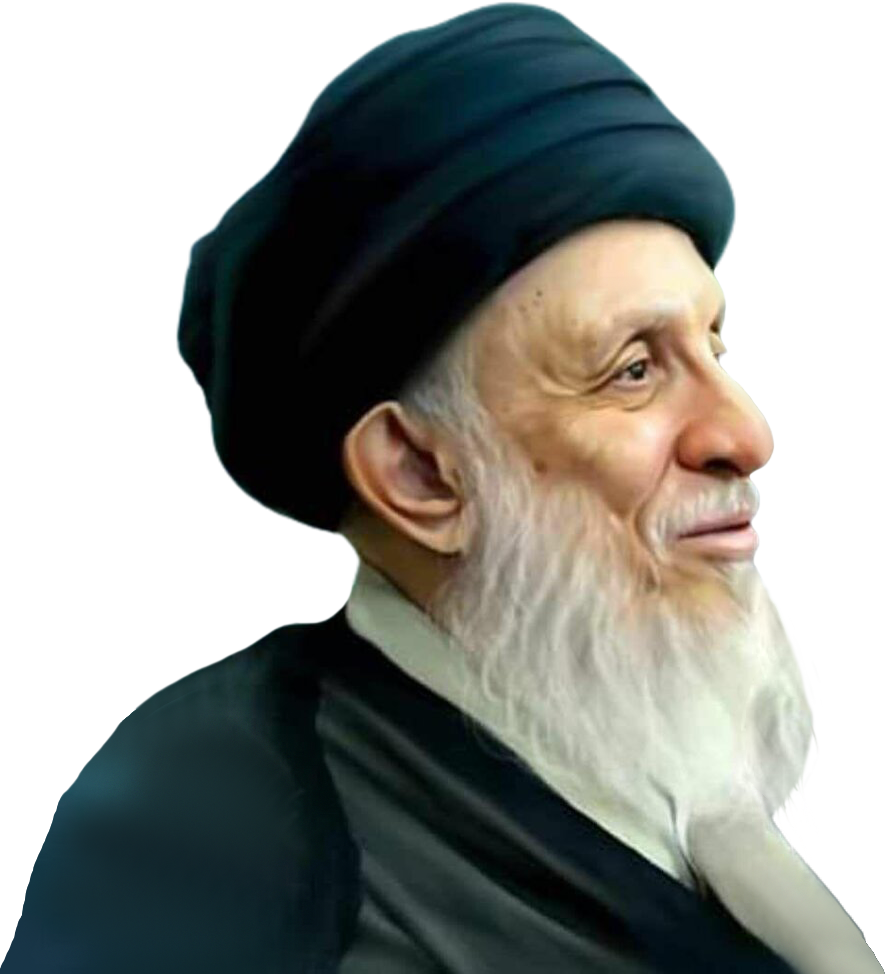
A non-governmental, non-profit humanitarian organisation providing purely humanitarian services to orphans, widows, people in need, disaster-affected people and displaced people. It was founded by the Grand Religious Authority Sayyed Muhammad Saeed al-Hakim (may his soul be sanctified) on 4 April 2007 in the Republic of Iraq, and it is registered with the Non-Governmental Organisations Directorate of the General Secretariat of the Iraqi Council of Ministers under number 73462. It was granted Special Consultative Status by the United Nations Economic and Social Council in 2016, and public-benefit status by the General Secretariat of the Iraqi Council of Ministers in 2016. Its headquarters is in the city of Najaf, and it has 19 branches and offices in 14 Iraqi governorates.
Origins and Establishment
His Eminence the Supreme Religious Authority Sayyid Muhammad Saeed al-Hakim (may his soul be sanctified) placed the sponsorship of orphans, widows and those in need at the forefront of his concerns. From the time he assumed the office of the religious authority in 1992, His Eminence worked to support this humanitarian undertaking.
As the numbers of orphans rose as a result of the systematic targeting of innocent people after 2003, His Eminence directed that a foundation be established to sponsor orphans, widows and the victims of terrorism and violence throughout Iraq. This took shape in the founding of the Orphan Charity Foundation, which opened on 4 April 2007 to take on the responsibility of easing the heavy burdens that terrorism and violence had left upon orphans and widows.
Departments of the Foundation
Sponsorship Department
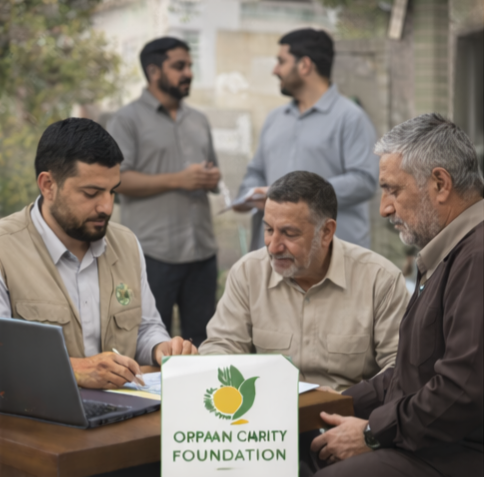
The department provides sponsorships for orphans through specialised field committees that work to reach benefactors and donors in order to present the sponsorship programme, document the records of sponsors and sponsored orphans, and prepare sponsorship receipts.
Donation Boxes Department
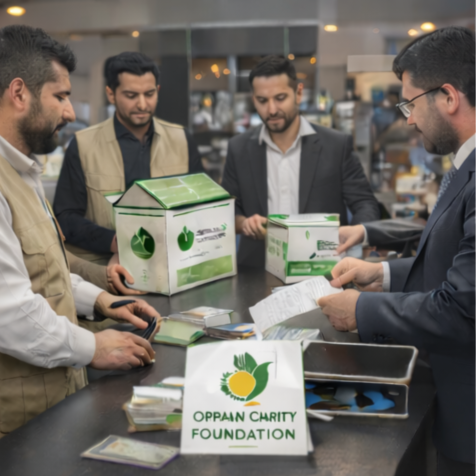
The donations and boxes department distributes donation boxes in commercial markets, shops and academic institutions through field distribution committees. After three months, the committees collect the funds using instant electronic means and hand the receipts directly to the box holders, after which the amounts are delivered to the Financial Affairs department.
Financial Affairs
The department is responsible for preparing financial reports, drawing up budgets, setting plans relating to financial matters, disbursing entitlements and allocations, and taking stock of and valuing the Foundation's assets, in addition to the annual inventory. Its objectives include controlling the Foundation's financial position, managing liquidity (through expenditure and revenue), preparing periodic reports, and keeping, recording and archiving vouchers and invoices.
Social Care
The social care department documents family records through field survey committees deployed across most of Iraq's governorates, districts, sub-districts and villages, where information is gathered, processed and analysed in order to decide on inclusion in the Foundation's programmes. Foremost among these programmes are the monthly stipend, the food basket, orphans' clothing, building and renovating homes, health, education and recreation programmes, and the marriage of adult orphans.
Administration
The administration works to achieve the defined objectives by investing the available resources according to an organised methodology and working environment, and it comprises several units such as incoming and outgoing correspondence, enquiries and services, vehicles, information technology, and human resources.
Public Relations and Media
The department is responsible for strengthening the Foundation's relationship with society, highlighting its role in delivering services to orphans, and building bridges of cooperation with bodies, authorities, associations and institutions. Its work also includes taking part in conferences and media programmes, publishing the Foundation's news through the media and social networks, issuing publications and media reports, documenting activities and producing film material, and making use of notable occasions to run media campaigns.
Registrations and Accreditations
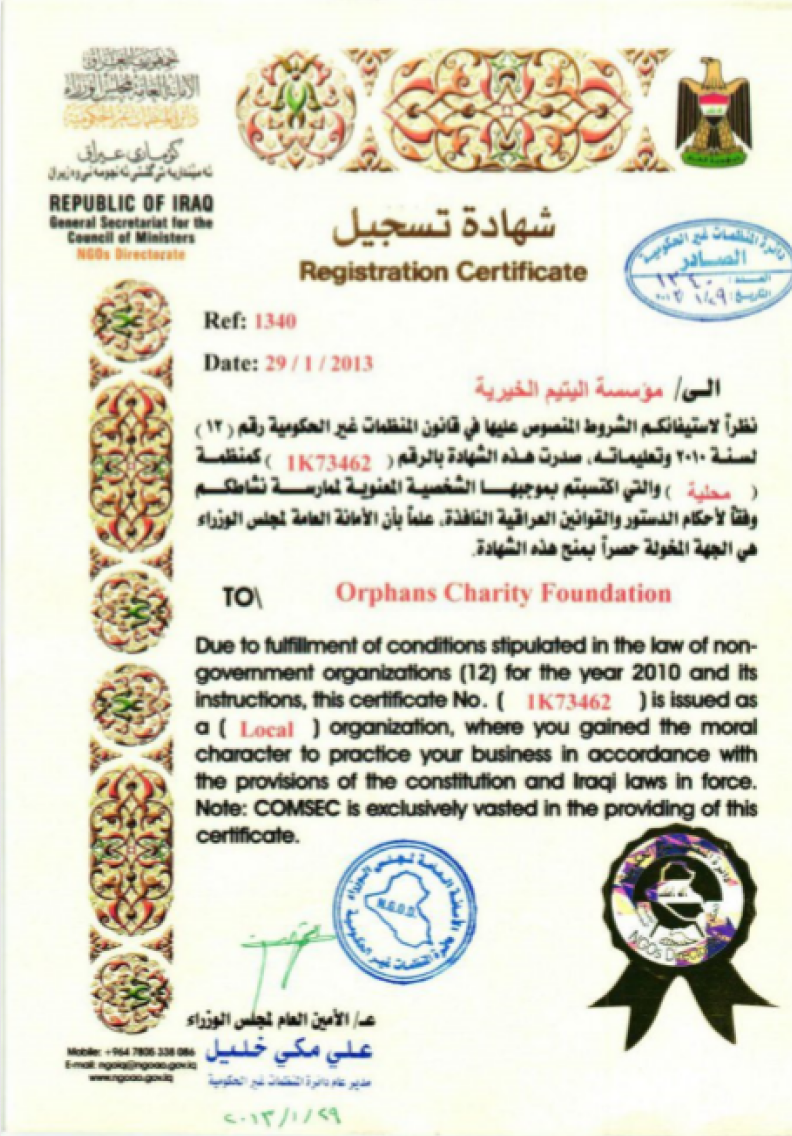
Registration Certificate
29 January 2013Ref. 1340
General Secretariat of the Council of Ministers — NGO Directorate
Certificate registering the Orphan Charity Foundation as a local organisation under number 1K73462, pursuant to NGO Law No. (12) of 2010.
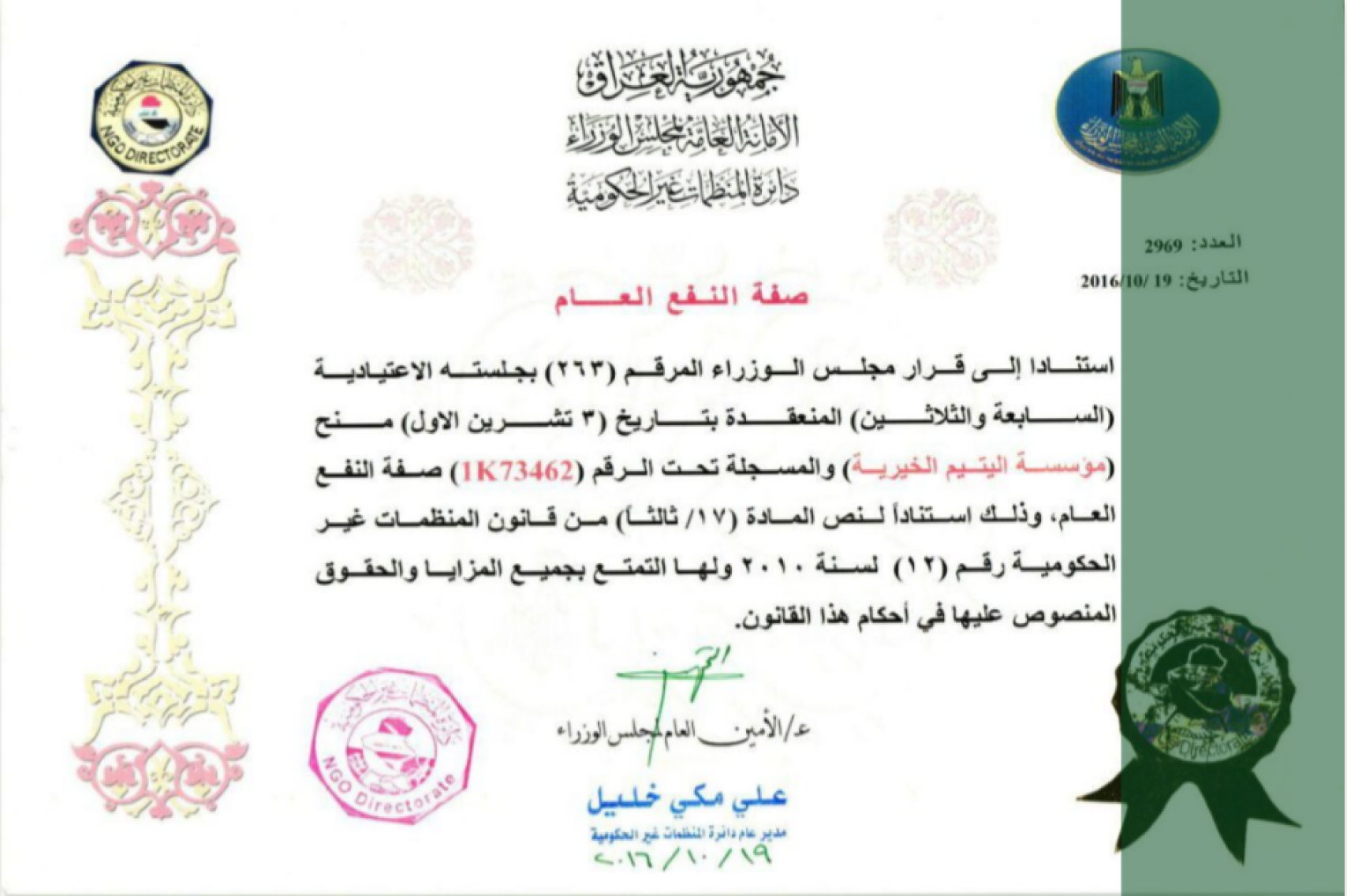
Public Benefit Status
19 October 2016No. 2969
General Secretariat of the Council of Ministers — NGO Directorate
Granting of public benefit status pursuant to Council of Ministers decision No. (263) in its thirty-seventh ordinary session, under Article (17/III) of NGO Law No. (12) of 2010.
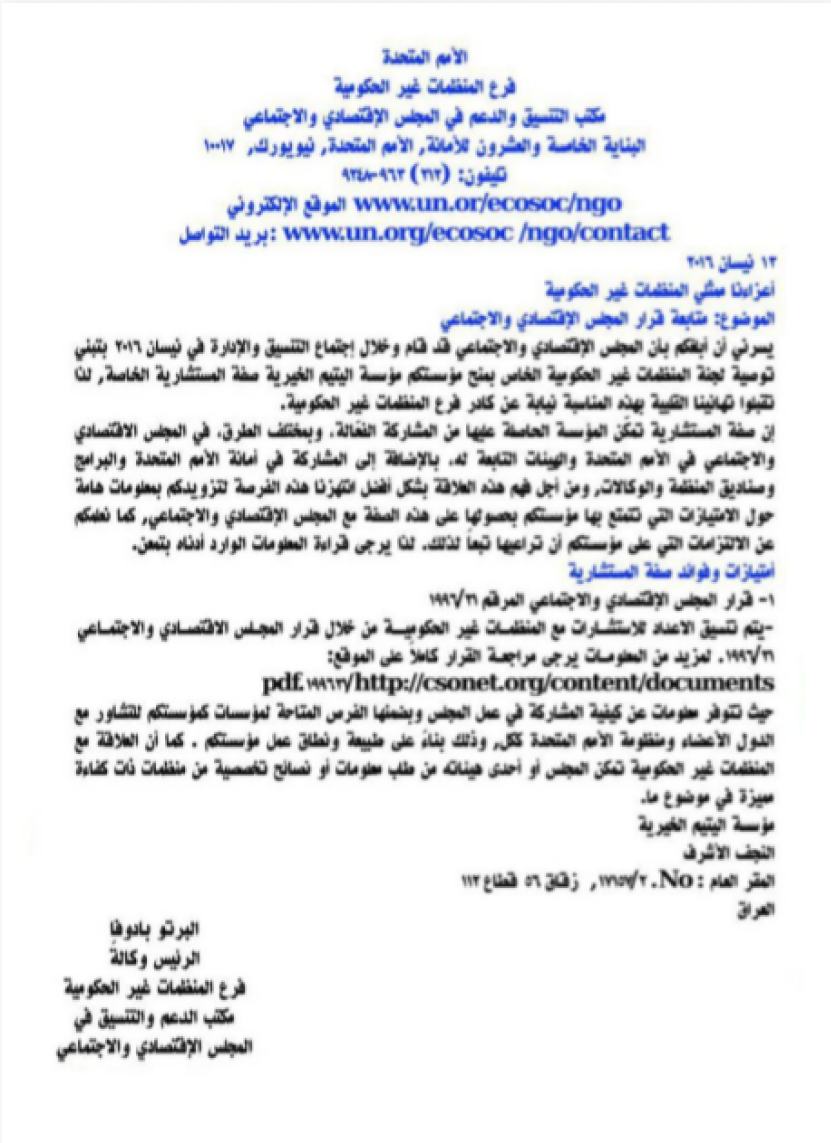
Special Consultative Status with the Economic and Social Council
13 April 2016
United Nations — NGO Branch, Office for ECOSOC Support and Coordination
Notification that the Economic and Social Council adopted the recommendation of the NGO Committee to grant the Foundation special consultative status.
Annual Reports
PDF files — open in a new window